Why We Worship the Warlord
The Prestige TV Illusion and the Spencer/Alex Prequel
The cultural footprint of the Yellowstone universe (1923, 1883, and the flagship show) operates as a massive form of prestige TV melodrama wrapped in a cowboy hat, specifically designed to make absolute ruthlessness look like a virtue. It is frequently labeled “prestige TV for red states” because it taps deeply into populist anxiety, using an ongoing narrative sleight of hand regarding principles, power, and violence.
We see the absolute peak of this narrative manipulation in the prequel 1923 with the story arc of Spencer Dutton and his British aristocratic wife, Alexandra (Alex). Alex flees her stifling, high-society life to run away with Spencer, a deeply traumatized WWI veteran working as a big-game hunter in Africa. After surviving shipwrecks and a forced separation by her vengeful ex-fiancé on the high seas, Alex undertakes a brutal solo journey through America. She arrives at Ellis Island alone, pregnant, faces assault in New York, and takes a train west into a blinding winter blizzard. Stranded in a stalled car in the freezing wilderness with advanced frostbite, she lights the car on fire to signal for help. In a wildly cinematic, mathematically absurd stroke of fate, Spencer happens to be on a passing train, spots her through the frosted glass, and leaps from the moving carriage into the snow to rescue her. Alex delivers their baby boy—the future of the Dutton lineage—and dies from the physical toll.
The Structural “BS”: Plot Armor as Manifest Destiny
This “providential train jump” and the phenomenon of “passing in the night” are pure plot armor masquerading as destiny. It is built entirely on a hyper-American, Manifest Destiny mythos: the narrative tells the audience that if a white protagonist is tough enough, resilient enough, and contains enough “raw grit,” the universe itself will bend its laws to reward them.
The narrative literally tortures Alex to death via hyper-aggressive frostbite just to yield a male heir to carry the name. Her entire existence is reduced to a human crucible designed to test the strongman’s endurance and secure the land. The message to a working-class audience is clear: absolute ruthlessness and cosmic luck belong to a chosen, rugged few—and if you are just tough enough, you are entitled to take what you want.
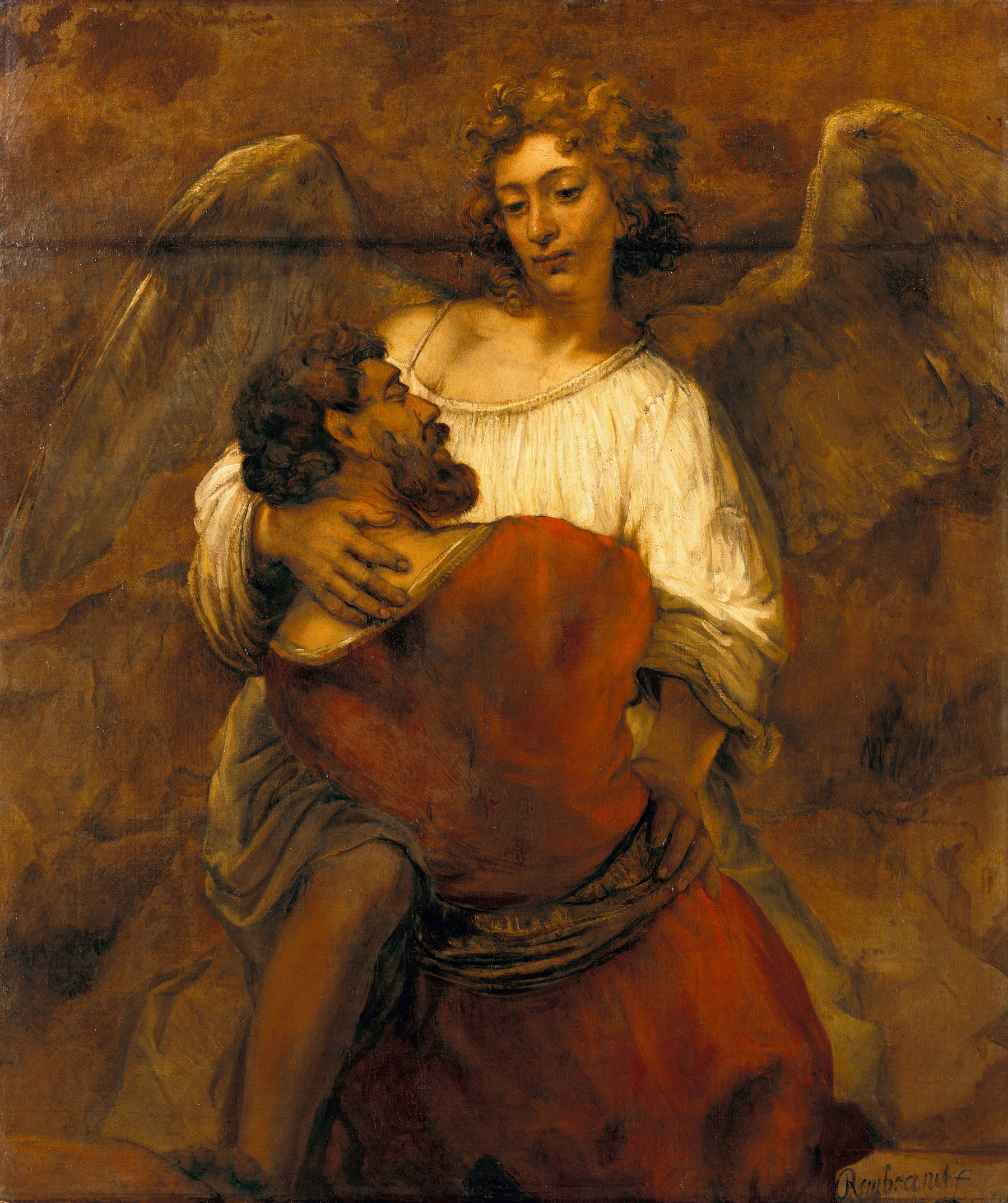
The Ancient Root: Jacob Wrestling the Angel
This narrative loop is actually a secularized, upside-down rewrite of the ancient biblical archetype of Jacob wrestling the angel (Genesis 32). In the original scripture, Jacob confronts a supernatural, divine force. He refuses to back down despite being physically broken, famously declaring, “I will not let you go unless you bless me." Jacob gets his thigh popped out of joint, but he receives a spiritual transformation and a new name, Israel (“he who strives with God”). It is a story about human limitation and submission to a higher cosmic order.
Taylor Sheridan strips the religion out of the myth and replaces it with pure American exceptionalism. Spencer Dutton doesn’t wrestle a divine angel to learn humility; he wrestles nature itself (the blizzard, the wilderness, the ocean) to prove his absolute sovereignty. He doesn’t submit to a higher power; he demands that the elements submit to him. His “blessing” isn’t a holy covenant—it’s a dynastic heir and a piece of land. The audience mistakes author-written plot armor for divine favor, learning a dangerous lesson: your violence and overreactions aren’t sins, they are proof that you are one of the chosen ones.
J.R. Ewing and the Marketing of the Elite
This bloodline runs directly into Dallas, which gripped the nation in the late 1970s and 1980s. During the Carter-era “malaise,” America suffered from a massive crisis of confidence. Enter J.R. Ewing: a corporate pirate in a cowboy hat who lied, cheated, and destroyed lives to protect Ewing Oil. J.R. had zero actual morals, only appetites. Audiences tired of feeling helpless loved him because he was their villain. Beth Dutton is simply J.R. Ewing updated for the 2020s—louder, more vulgar, and physically violent. Where Dallas justified cutthroat, deregulated capitalism (“Greed is good”), Yellowstone justifies defensive, aggressive tribalism (“The world is out to destroy us, so we must destroy them first”).
Both shows get working-class audiences to root for ultra-wealthy elites by using the costume of the underdog. John Dutton controls a massive empire but wears a dirt-stained denim jacket. This exact branding strategy is mirrored by the modern tech elite. The Silicon Valley billionaire wearing a plain hoodie and a $400 grey t-shirt is performing the exact same cultural theater. They dress down to evade scrutiny and look like anti-establishment rebels, allowing them to channel working-class grievance while quietly building an tech-monopoly empire that hoards all the power and leaves the public with all the rules.
The Cliffhanger
How does an audience that cheers for this unprincipled, mythic brutality on Saturday night go to church on Sunday and demand strict moral legislation?